Specialist care from the very first days
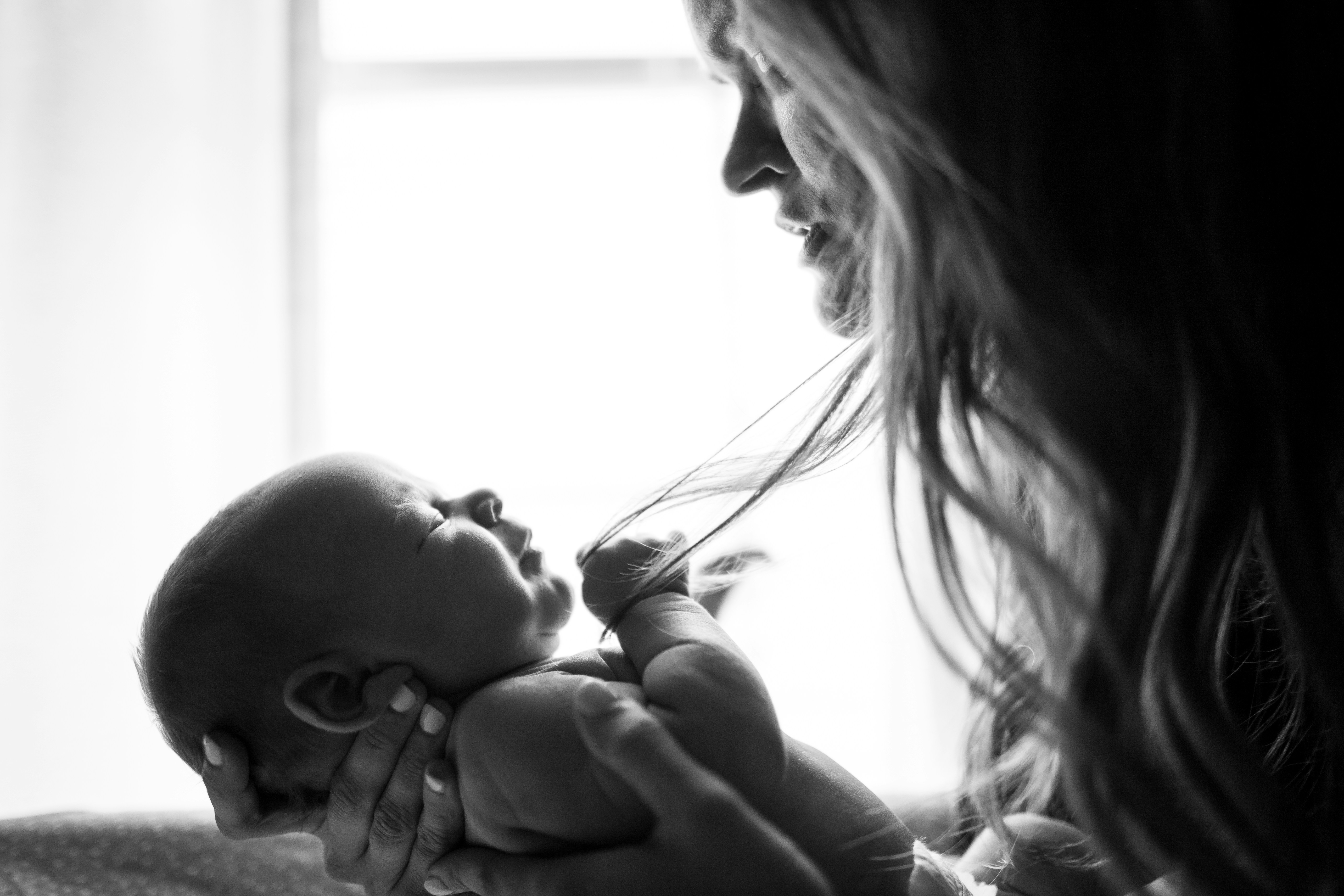
That's the most common thing we hear. And it's a completely fair question.
We do not diagnose or treat specific medical conditions. Osteopathic care is complementary and focuses on supporting your baby's overall comfort, movement and development. Always consult your GP, midwife or health visitor if you have concerns about your baby's health.
You've probably already been through the sleepless Google spiral. You've read about all sorts of possible reasons for what you're seeing. You've had advice from your health visitor, your friends, your GP. And somewhere in the middle of all of it, someone said — have you thought about seeing an osteopath?
Here's what we actually do.
Many of the things parents notice in early infancy are common and often improve over time. We try to understand what may be contributing to what you're seeing — looking at how your baby is moving, how their nervous system is responding, and whether there are any patterns worth exploring further.
Our job is to listen first.
"Lazy feeder." "Strong personality." "Just a difficult baby."
These labels are unfair. They imply your baby has conscious control over what they're doing. They don't. In the early weeks, much of a baby's behaviour is guided by the brainstem and primitive reflexes, but their responses are also shaped by comfort, environment, and interaction with you.
It is not a personality. It is not stubbornness. It is not something you've caused.
In the early months, a baby's behaviour is largely guided by reflexes and their developing nervous system. So when you notice things that don't feel quite right — in how your baby is moving, feeding, settling, or responding — these can sometimes be linked to patterns in how your baby is moving and responding.
That's what we look at.
Think about what prolonged stress does to your own body. Your shoulders hunch. Your jaw tightens. Your digestion can become unsettled — discomfort, a gut that won't behave as usual. You go from calm to overwhelmed faster than usual.
Your baby's nervous system can respond in similar ways — in a much smaller, much more vulnerable body, with no other way to tell you.
At the other end of the ladder — in rest and digest — something different becomes possible. Sleep cycles link together. Feeding settles. The nervous system is available to learn, to integrate movement, to develop.
When a baby is in a more stressed or unsettled state, feeding, settling, and movement can become more difficult. The nervous system has to come down the ladder first. Helping a baby find that regulated state isn't a warm-up to the work. It is the work.
The following describes our approach. We do not diagnose or treat specific medical conditions. We look at your baby's individual movement patterns, nervous system state, and reflexes as part of a gentle osteopathic assessment. Every baby is assessed individually and we do not make claims about outcomes.
Families come to us for many different reasons. Some have a specific concern they've been carrying for weeks. Others have been referred by another professional — a lactation consultant, a tongue-tie practitioner, a health visitor — and aren't quite sure what to expect. Some simply have an instinct that something isn't quite right, without being able to put it into words.
All of those are good reasons to come. We don't need a diagnosis or a referral letter. We need your story.
What we look at in an assessment is the whole picture — how your baby is moving, how their body is organised, how their nervous system is responding to the world around them, and whether there are any early reflex patterns that haven't yet integrated as expected. We look at what may be contributing from a structural and neurological perspective, and we share what we find with you clearly so you can make informed decisions about next steps.
We work alongside your GP, health visitor, and any other professionals involved in your baby's care — not instead of them. If we find something that needs medical attention, we will tell you.
"I was sitting in a breastfeeding support training almost fifteen years ago when it first struck me. We were talking about position and attachment — 'nipple to nose, tummy to mummy' — and I found myself thinking: what if the baby simply couldn't do what we were asking of them? Not because of anything the mother was doing wrong, but because of how their birth had affected their body?
I looked around and found almost nobody else asking that question — and very little written on it. So I went looking for the answers myself. That search took me into infant feeding, tongue-tie, and eventually reflex integration — understanding how early primitive reflexes, when they don't integrate as they should, can affect everything from feeding to movement to sleep. It eventually led me to contribute to postgraduate teaching in infant feeding for osteopaths in the UK."
In a paediatric osteopathic assessment, we look at how your baby is moving as a whole — the organisation of their spine, pelvis, ribcage, neck and head, and how these relate to each other. We look at primitive reflex patterns and whether they appear to be integrating as expected for your baby's age. We look at the state of their nervous system — whether they seem regulated and available, or whether they appear to be in a more stressed or unsettled state that may be affecting how they're functioning day to day.
We may observe a feed where relevant, as this can give useful information about overall movement and body organisation.
Where birth history is relevant — including the type of birth, how long labour lasted, and whether any intervention was used — we take this into account as part of the wider picture. Birth is a significant physical experience for a baby, and understanding it helps us understand what we find.

Those guy ropes are the global structural pattern — from the feet, hips and pelvis upwards, through the ribcage, the shoulders, the neck, and the base of the skull. This is what we assess. Not just the jaw and oral structures in isolation, but the whole body they sit within.
A baby with a tongue-tie has often spent their early weeks with a tongue that can't rest or move in the way it was designed to. The body responds as it's designed to: it compensates. The tongue and chin may come forward to help manage the airway. Separately, a tension pattern through the neck from birth — sometimes described as an unresolved torticollis — may mean one side of the body is already working harder than the other, with muscles pulling at slightly different angles on each side.
These patterns can build up quickly in early life, even in a few weeks. They often become visible through feeding, settling, or the way a baby holds themselves.
We look at what may be contributing from a structural perspective — and whether addressing those foundations may support what the professionals already involved in your baby's care are working on.
Orofacial reflex integration — the relationship between early primitive reflexes and oral-motor function — is an area of specific clinical focus across our practice.
If your baby is preparing for a tongue-tie division, it's worth thinking about what the body around the tongue-tie has been doing in the meantime.
The division addresses the restriction itself. But the compensatory patterns the body has built around it — the way it has learned to breathe, to feed, to hold tension — don't always resolve automatically when the tie is released. Often those patterns need to be looked at in their own right.
We often see babies in the period leading up to their division — looking at the wider structural picture, and considering what may need attention beforehand. We work in close contact with whoever is carrying out the procedure and the wider team involved.
We send a medical history form covering your pregnancy, birth, and the days or weeks since — so we're already oriented when you walk in.
You'll tell us the story in your own words — the birth, the feeding, the sleep, the things that worry you. That story matters as much as anything we find with our hands.
Where relevant, we may observe a feed during the appointment, as this can give useful information about overall movement and body organisation.
Very gentle — nothing forceful, nothing alarming. We want to understand your baby.
Everything we find is explained clearly. Nothing is rushed. If we're not the right fit, we'll say so and point you somewhere that is.
Babies change fast. The window for supporting early development is real, and it moves quickly. So rather than simply asking families to return without purpose, we give you the tools to keep the work going at home — exercises and activities tailored to your baby, explained clearly so you understand what you're doing and why.
"Think of it like a path through a forest."
In an appointment, we find the right path together and start walking it. Between sessions, your job is to keep walking — repeating the movements and activities that help that path deepen and become established. The old, unhelpful pattern gradually grows over from disuse.
We're here when your baby needs the path found again. And in between, you can always reach us on WhatsApp — questions answered, reassurance when you need it, and a clear steer on when it's time to come back in.
Felicity sees babies across all three clinics and has a particular interest in feeding and unsettled babies. She leads the Complex Feeding Clinic at Princes Risborough alongside Luci Lishman at Chiltern Breastfeeding Partnership.
Not sure if the Complex Feeding Clinic is right for you? Message us on WhatsApp first.

Antonietta brings a carefully combined cranial and structural approach to every baby appointment, drawing on her Diploma in Paediatric Osteopathy from the Osteopathic Centre for Children — the leading qualification in this field in the UK. She sees babies at Berkhamsted and Princes Risborough.
Experiences shared by families are individual and outcomes can vary. We assess each baby individually and do not make claims about outcomes. We do not diagnose or treat specific medical conditions.
"After our first session he just relaxed and started to settle. After a few sessions he is a very settled, smiley happy baby."
"100% best money we've spent. James is so much happier, so settled and he's super smiley."
"The best thing about the appointment was seeing my son able to turn his head towards our voices."
Book when you're ready. Or WhatsApp us first if you'd like a steer on whether an appointment makes sense for your baby right now.
Our tummy time guide is a good place to begin — it's a window into your baby's developing nervous system, and why these early months matter more than most parents are ever told. Written by Felicity from fifteen years of clinical practice.
Get the free guide Follow @BabyPathway on InstagramOsteopathy is a complementary therapy and not a substitute for medical diagnosis or treatment. If you have concerns about your baby's health, please consult your GP, midwife, or health visitor.